Why Bone Health Matters Before Getting Implant Dentures
Author:Dr. Tommy G. Hillman
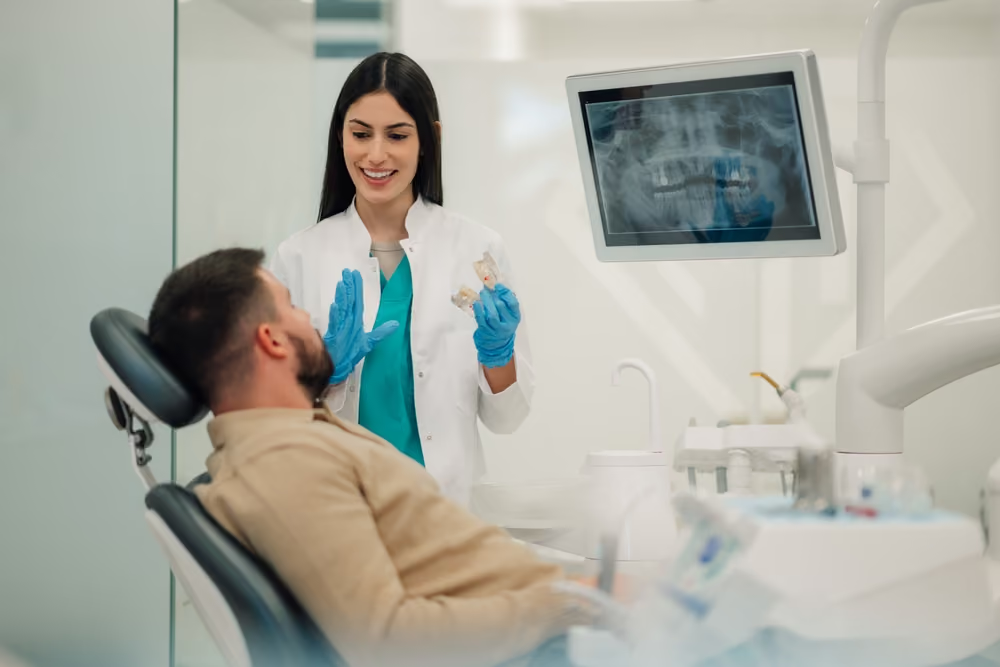
Choosing implant dentures is one of the best decisions you can make for long-term oral health, comfort, and confidence. However, before you can enjoy the stability and natural feel that implants provide, your jawbone must be strong enough to support them. This is why bone health and dental implant planning is such a crucial part of the evaluation process.
Implant dentures rely on a secure foundation, and that foundation is your jawbone. Understanding how bone loss occurs, why bone density matters, and what can be done if bone volume is insufficient can help you make informed decisions about your treatment.
How Bone Loss Happens After Tooth Loss
Bone loss in the jaw is a natural biological response when teeth are missing. Each tooth root stimulates the jawbone during chewing, sending signals that keep the bone healthy and active. When a tooth is removed or lost, that stimulation stops.
Over time, the bone in that area begins to shrink in a process called resorption. This shrinkage can happen rapidly. Some patients lose as much as 25% of bone width within the first year of tooth loss.
If multiple teeth have been missing for years, the cumulative bone deterioration can be significant. This not only affects facial structure but also creates challenges for anyone seeking implant dentures.
Why Bone Density Matters for Implants
Implant dentures anchor into the jaw using several small titanium posts placed into the bone. For these posts to function correctly, the bone must be:
- Dense enough to hold the implants securely
- Tall enough and wide enough to accommodate implant length and diameter
- Healthy enough to support long-term healing and integration
This integration process, called osseointegration, is the foundation of implant stability. Without sufficient bone health, osseointegration may fail, causing implants to loosen or not integrate at all.
This is why evaluating bone health and dental implant candidacy is always one of the first steps in the treatment process.
Signs You May Have Bone Loss
Many patients don’t realize they have bone loss until a dentist performs a scan. However, certain signs may indicate reduced bone density:
- A sunken or collapsed facial appearance
- Long-term denture wear
- Difficulty keeping dentures stable
- Missing teeth for several years
- Gum recession or periodontal disease history
Digital imaging, particularly CBCT scans, provides your dentist with a detailed view of your bone height, width, and density.
Can You Still Get Implant Dentures if You Have Bone Loss?
The good news is that many patients with bone loss can still receive implant dentures. Modern technology and regenerative techniques make it possible to rebuild or reinforce the jawbone before implant placement.
The most common and effective method is bone grafting for implants.
What Is Bone Grafting?
Bone grafting is a procedure where natural or synthetic bone material is added to areas with insufficient volume. Over time, this graft integrates with your natural bone, increasing strength and density.
Here’s how bone grafting supports implant success:
- Restores bone volume to create a stable foundation
- Encourages new bone growth through biologic stimulation
- Improves implant longevity by reinforcing weak areas
- Enhances facial structure by restoring natural contours
Bone grafting can be done before implant placement or, in some cases, at the same time, depending on the severity of bone loss.
Types of Bone Grafts Used for Implants
Bone grafting isn’t a one-size-fits-all procedure. Your dentist chooses the appropriate type based on your unique needs.
Socket Graft
Placed immediately after a tooth extraction to preserve bone.
Ridge Augmentation
Used when the jaw ridge has significantly thinned or collapsed.
Sinus Lift
Performed on the upper jaw when the sinus cavity limits implant placement.
Block Graft
Used for severe bone defects requiring substantial reconstruction.
Each type serves the same purpose: to rebuild a strong, healthy environment for implant dentures.
How Bone Grafting Affects the Implant Timeline
Bone grafting does add healing time before implants can be placed. Depending on the graft size and location, healing may take anywhere from 3 to 6 months.
However, the long-term benefits outweigh the wait:
- Better implant stability
- Higher success rates
- More comfortable final dentures
- Improved bite strength and chewing function
Skipping a needed bone graft can significantly increase the risk of implant complications.
Long-Term Benefits of Healthy Bone for Implant Dentures
When your jawbone is strong, the results of implant dentures are dramatically better. With sufficient bone health, patients experience:
Improved Chewing Power
Healthy bone means implants can absorb bite forces effectively.
A More Natural Facial Appearance
Dense bone maintains lower facial height, reducing sunken cheeks or wrinkles.
Better Speech and Comfort
Stable implants prevent movement or clicking that traditional dentures cause.
Longer-Lasting Restorations
Healthy bone reduces the risk of implant shifting or failure over time.
How to Protect Your Bone Health After Implants
Once implant dentures are placed, maintaining bone health becomes easier, but still requires attention. Follow these key steps:
- Maintain excellent oral hygiene
- Stick to recommended checkup intervals
- Avoid smoking, which slows bone healing
- Eat a balanced diet rich in calcium and vitamin D
- Follow any personalized instructions from your implant provider
Final Thought: The Right Foundation Builds a Strong, Lasting Smile
Bone health plays a vital role in the success of implant dentures. Without strong bone support, even the most advanced implants cannot perform at their best. Fortunately, modern dentistry offers effective solutions such as bone grafting for implants to help rebuild what has been lost.
If you’re considering implant dentures but are concerned about bone loss, a thorough evaluation is the first step. With proper planning, modern techniques like bone grafting for implants, and the expert care provided by Restoral Dental, you can restore your smile with stability, function, and long-lasting confidence.

Explore more blogs
%20(1)%20(1).avif)
Welcome to Restoral Dentures & Implants

Why Dental Implants Are Often the Best Tooth Replacement Option